


Irish Roulette

F X Priestmann
The Irish Courts rarely declare a miscarriage of justice
but that does not mean that miscarriages are rare.
How far would you go to defend the truth when the odds are stacked against you?
When “George”—a former Catholic priest—receives an unexpected phone call from a police detective, his world is turned upside down by a sudden, devastating accusation. Faced with historical allegations of sexual misconduct, he is given a choice: admit guilt to crimes he never committed, or take his chances against the unyielding machinery of the justice system.
He chooses to fight.
Irish Roulette is an extraordinary, unfiltered account of one man’s battle to clear his name. Exposing the harrowing realities of modern legal proceedings, the book dissects the “five bullets” an accused person must dodge—from police interrogations and prosecutorial bias to institutional self-preservation and jury trials. With a sharp eye for detail, the author dismantles the glaring contradictions in the claims against him, from misidentified cars to impossible timelines, while offering a scathing critique of a system where the presumption of innocence feels dangerously compromised.
Written with dark wit, pragmatic realism, and profound candor, Irish Roulette is not a plea for sympathy, but an eye-opening, behind-the-scenes look at what happens when institutional self-protection collides with personal integrity.
A compelling, unforgettable read for anyone interested in true crime, legal drama, and the human cost of false allegations.
*****
Irish Roulette is a full and frank account of George’s story – this book cannot reverse what happened to him but it will hopefully encourage potential jurors to make verdicts based on proper evidence. This book hopes to prevent others from sharing his fate.
(Paperback: 258pp)
€8.00
Seller Bio
Sold by: F X PriestmannReviews (3)
3 reviews for Irish Roulette
Add a review
Related Products



OFF
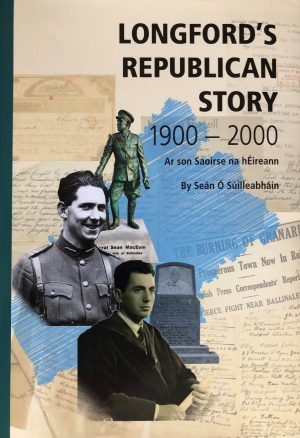
Longford’s Republican Story 1900-2000
Sold by Seán Ó Súilleabháin
€8.00


Suzanne Wilson –
I recently received a copy of Irish Roulette by F.X. Priestmann. The book presents the true account of a man who was falsely accused of a criminal offence and examines the profound impact the accusation had on his life and those around him.
Biographies and non-fiction works are not typically my preferred genre. However, having been asked to read this book and provide my opinion, I approached it with an open mind. In doing so, I discovered that it challenged my usual reading preferences—and ultimately broadened them.
The book centres on a former member of the clergy in Ireland during the latter decades of the twentieth century and into the twenty-first. After leaving the Church, he settled into a quiet life in rural Ireland. Many years later, however, he was contacted by An Garda Síochána and questioned in relation to allegations of abuse made by a younger man.
The author guides the reader carefully through each stage of the process, from the initial inquiries to the more formal interviews that followed. As is standard practice in such cases, the complainant’s allegations were taken seriously and investigated thoroughly. The book also raises important questions about how legal processes can be vulnerable to error when potentially exculpatory evidence is overlooked or insufficiently considered.
It is sobering and essential reading for anyone trying to understand the flaws in our legal system and yet appreciate the unbreakable power of the human spirit to survive and fight the system. It becomes clear how poor legal representation can affect your case and the now normal bias against the clergy within this country than can so easily railroad an innocent person.
The author was ultimately brought to trial and convicted on the evidence presented. However, he argues that significant evidence which may have supported his innocence was disregarded. The result is a compelling and thought-provoking account that highlights the potential shortcomings of the justice system while also demonstrating the resilience of the human spirit in the face of adversity.
What emerges is not a story driven by bitterness or resentment. Rather, the author recounts his experiences with remarkable clarity and restraint, describing both the devastation of the allegations and his determination to persevere. His eventual success in overturning his conviction on appeal forms a powerful part of the narrative, but equally compelling is his ability to forgive, rebuild his life, and move forward with dignity.
In the end, the book is surprisingly uplifting. It is a testament to the capacity for forgiveness, personal resilience, and the determination to find meaning after profound hardship. While this would not ordinarily be my preferred genre, I found parts of the book challenging to read—not because of the writing itself, but because it presents the full human story behind events that might otherwise be reduced to a brief news headline and quickly forgotten.
The book left me with mixed emotions: sadness for all those affected by the allegations and the consequences that followed, but also hope. Above all, it serves as a reminder of the remarkable ability of individuals to endure, recover, and continue with their lives despite extraordinary adversity.
Dr. Andrew Hynes –
I found this book brilliant, extremely well written, informative and shocking to believe. Priestmann’s experience is a real stain on our country, and the injustice and indecency he was subjected to is a travesty in itself and remains a lesson for us all that live in this Republic.
This book would excellent for secondary school students in particular as it is educational and thought provoking in a number of domains including the court system and jurisprudence, religion, morality and the penal system. Highly highly recommended.
Barry Courtney –
I received a pre-publication copy of this book and I found it a harrowing and at times upsetting read. Priestmann gives a thoughtful and positive insight into what he considers to be the reasons why so many people do not trust the law in Ireland. The story is wel told and I suppose the term “a real page turner” came to mind as I read it. Sadly, the final section (about 8 pages) is in Irish and I did not understand it.